Learning Outcomes in Listing:
i. Identify the key differences and similarities between mitosis in plant and animal cells.
ii. Understand the unique features of cytokinesis in both plant and animal cells.
iii. Recognize the role of specific cellular structures in the process of mitosis for both cell types.
Summary
After completing this lesson, students will be equipped with the knowledge to discern the critical distinctions and overlaps between plant and animal cell mitosis. They will grasp the unique characteristics of plant cells, such as the presence of a cell plate during cytokinesis, and compare them with the formation of a cleavage furrow in animal cells. This understanding will extend to recognizing how structures like centrioles and the spindle fibers operate differently in plant and animal cells during cell division.
Summary of Lesson:
Mitosis is a universal process in eukaryotic organisms, but it presents with nuances in plant and animal cells due to their structural differences. This lesson will contrast mitosis in plant and animal cells, focusing on the divergent mechanisms of cytokinesis and the roles of various cellular components in each type of cell.
i. Mitosis: A Shared Process with Distinctive Steps
Both plant and animal cells undergo the same phases of mitosis: prophase, metaphase, anaphase, and telophase. However, the physical manifestations of these phases can vary due to structural differences between the two types of cells.
ii. Cytokinesis: Cleavage vs. Cell Plate Formation
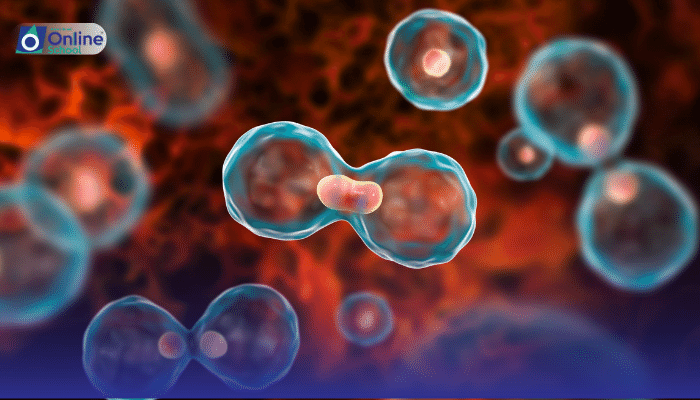
- In animal cells, cytokinesis is characterized by the formation of a cleavage furrow that pinches the cell into two.
- Plant cells, however, develop a cell plate that gradually expands and fuses with the cell wall, dividing the cell into two new cells.
iii. Structural Variations in Mitosis
- Animal cells contain centrioles that help organize the spindle fibers, which are less prominent in plant cells due to the rigid cell wall.
- Plant cells rely more on the vesicles derived from the Golgi apparatus to form the cell plate, a structure absent in animal cells.
List of Important Questions for Self-Study:
i. How does the presence of a rigid cell wall in plant cells affect the process of cytokinesis?
ii. What are the roles of centrioles in animal cells during mitosis, and why are they not prominent in plant cells?
iii. Why do plant cells form a cell plate during cytokinesis, whereas animal cells form a cleavage furrow?
iv. How do spindle fibers function in plant cells if centrioles are not present?
v. In what ways are the mitotic processes similar in plant and animal cells?
Important Terminologies Used in Lesson:
i. Mitosis: The process of nuclear division in eukaryotic cells that occurs when a parent cell divides to produce two identical daughter cells.
ii. Cytokinesis: The division of the cell's cytoplasm that results in the formation of two daughter cells.
iii. Cleavage Furrow: The indentation that appears in an animal cell's surface when the cell is preparing to divide.
iv. Cell Plate: The structure that forms during cytokinesis in plant cells, which will develop into the new cell walls.
v. Centrioles: Cylindrical structures in animal cells that serve as an organizing center for microtubules and are involved in the formation of the spindle fibers during mitosis.
